
Our Method
For a young child, music first needs to become something they can hear, feel and respond to. Through Dalcroze-inspired learning, Music Explorer turns abstract musical ideas into experiences children can understand through their bodies.
Listen
Children hear pulse, tempo, dynamics, pitch and musical change.
Move
They experience music through walking, running, pausing and spatial movement.
Respond
They change movement, rhythm or direction in response to the music.
Understand
Body experience connects to rhythm, notation and musical concepts.
Play
Finally, understanding reaches Rainbow Bells, keyboard and piano.
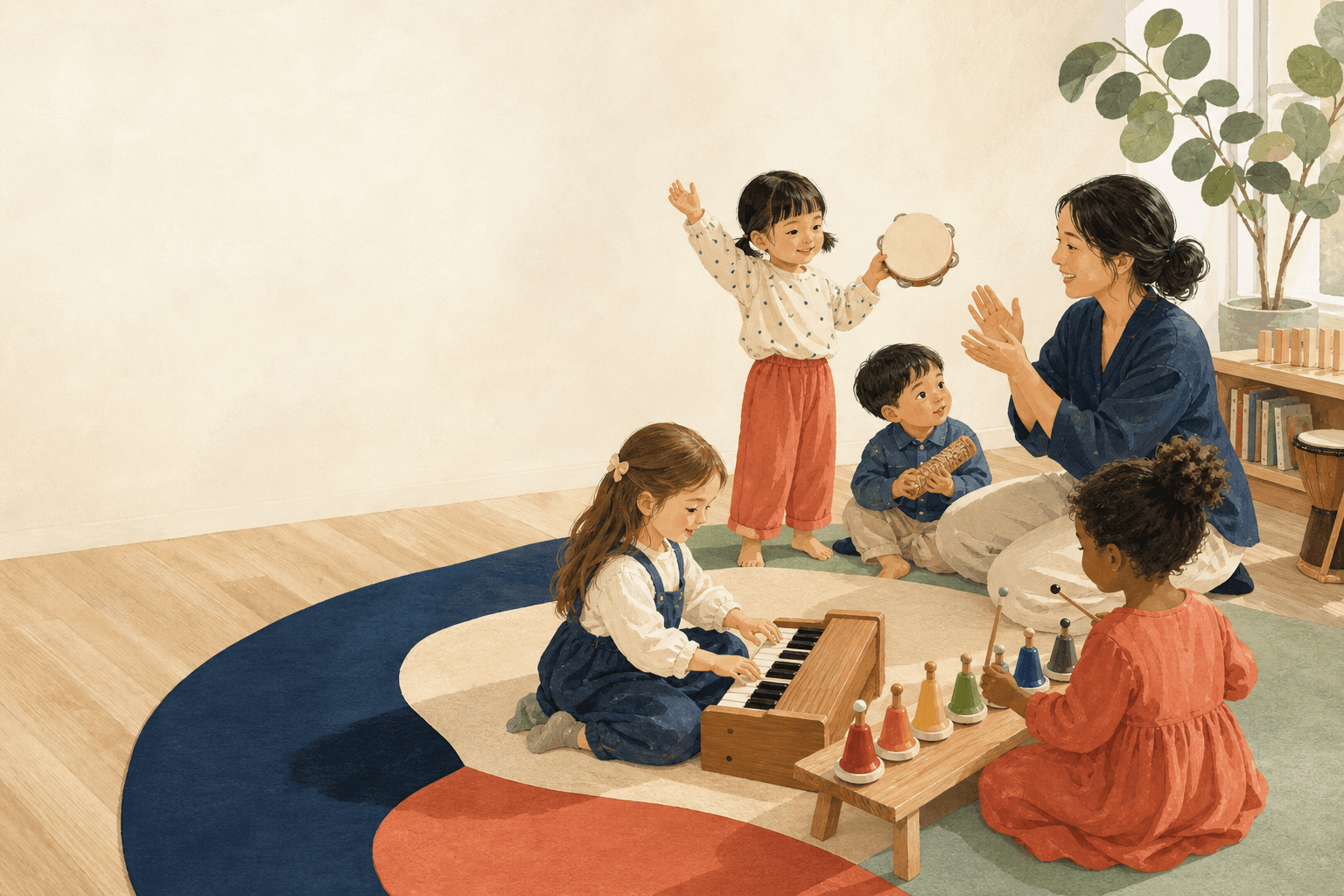
Dalcroze Eurhythmics
Dalcroze Eurhythmics uses movement as a way of experiencing and understanding music. Instead of explaining every concept first, a teacher may change the music and allow children to discover the difference through movement.
- Move faster or slower
- Freeze
- Change direction
- Alter the size of a movement
- Respond to musical signals
The goal is not simply to memorise the meaning of fast and slow. The child experiences what the musical change actually feels like.